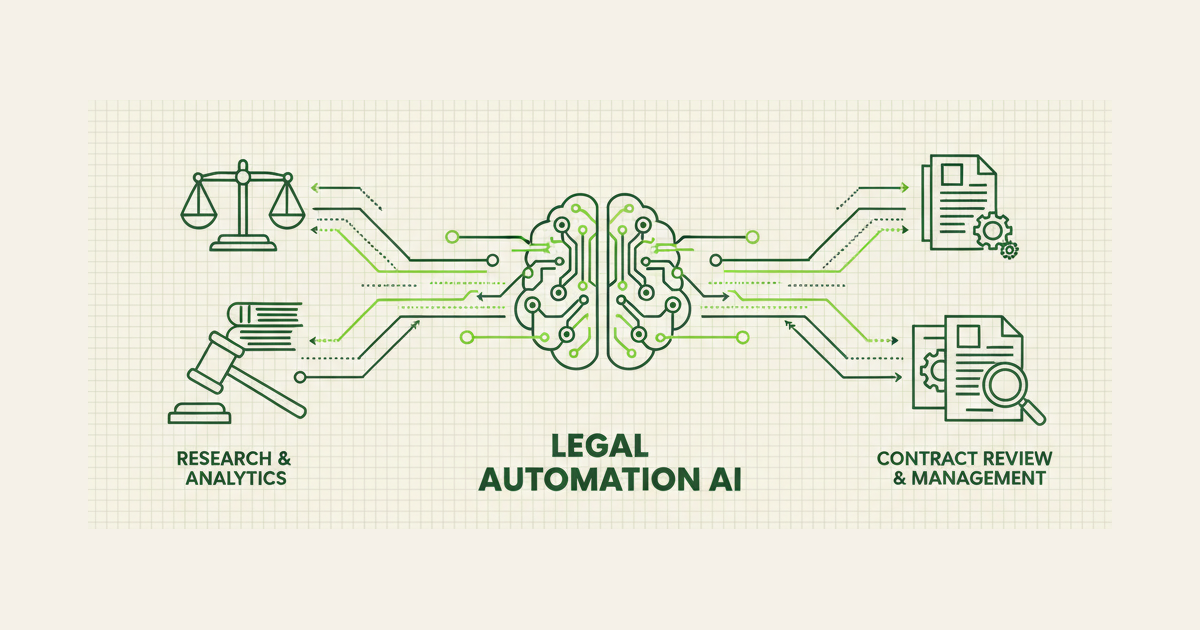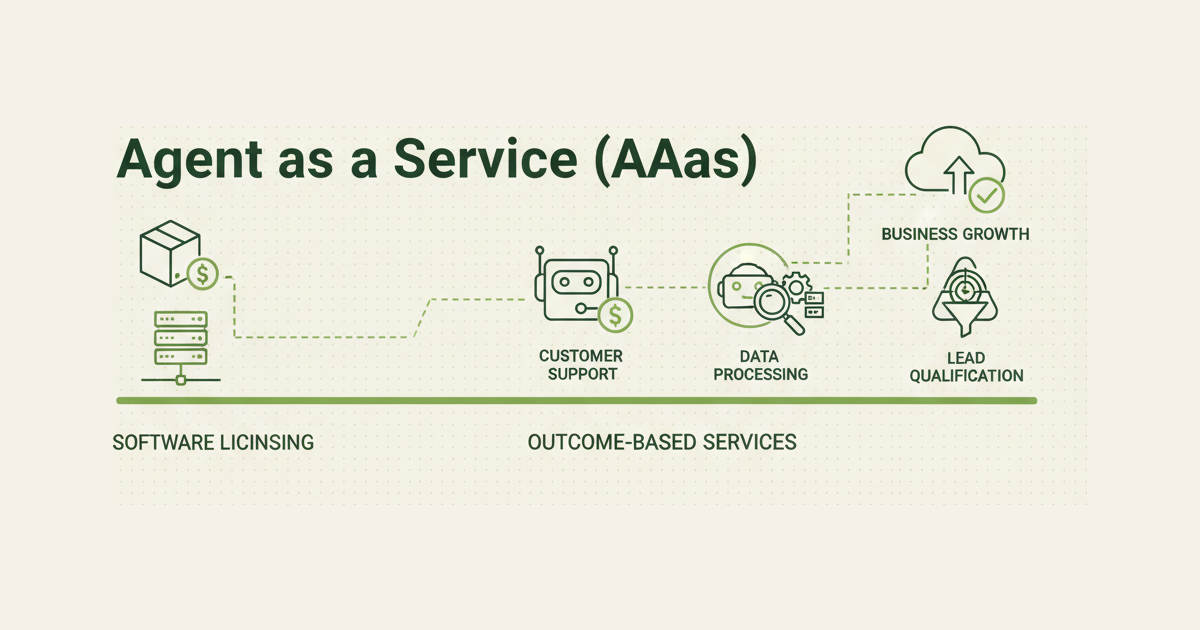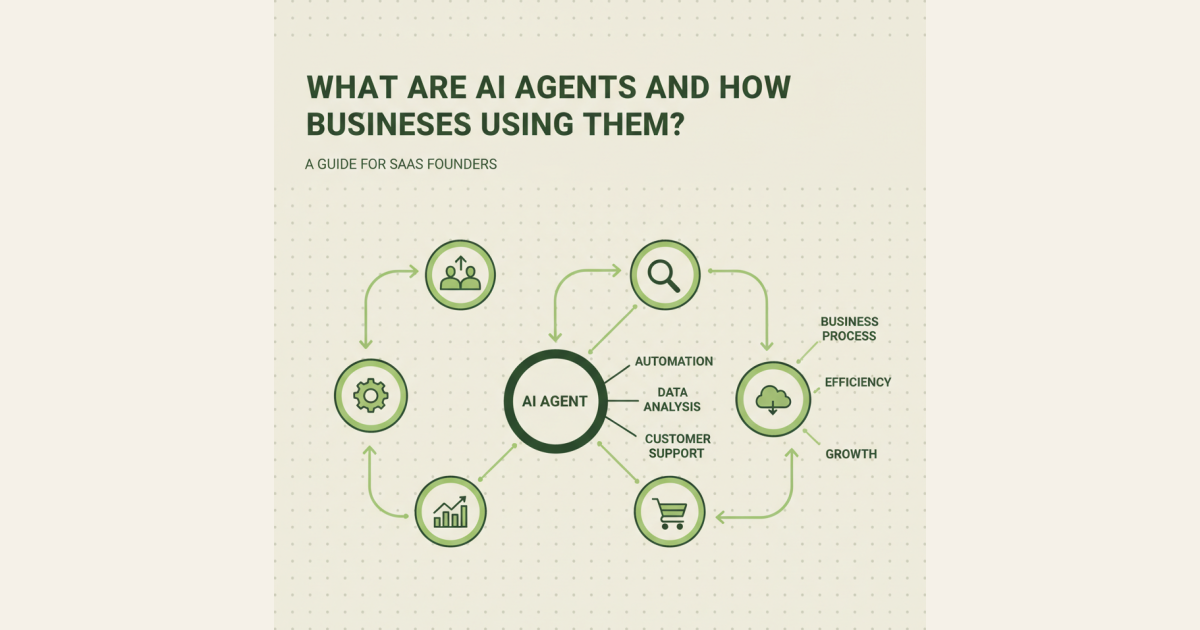
AI agents are transforming how businesses operate by automating complex workflows and decision-making processes
What Are AI Agents?
AI agents are autonomous software programs that can perceive their environment, make decisions, and take actions to achieve specific goals without requiring constant human intervention. Unlike traditional software that follows pre-programmed rules, AI agents use machine learning and natural language processing to understand context, learn from interactions, and adapt their behavior over time.
Think of an AI agent as a digital employee that never sleeps, never takes breaks, and gets smarter with every task it completes. These systems can process vast amounts of data, recognize patterns, and make decisions based on their training and real-time information.
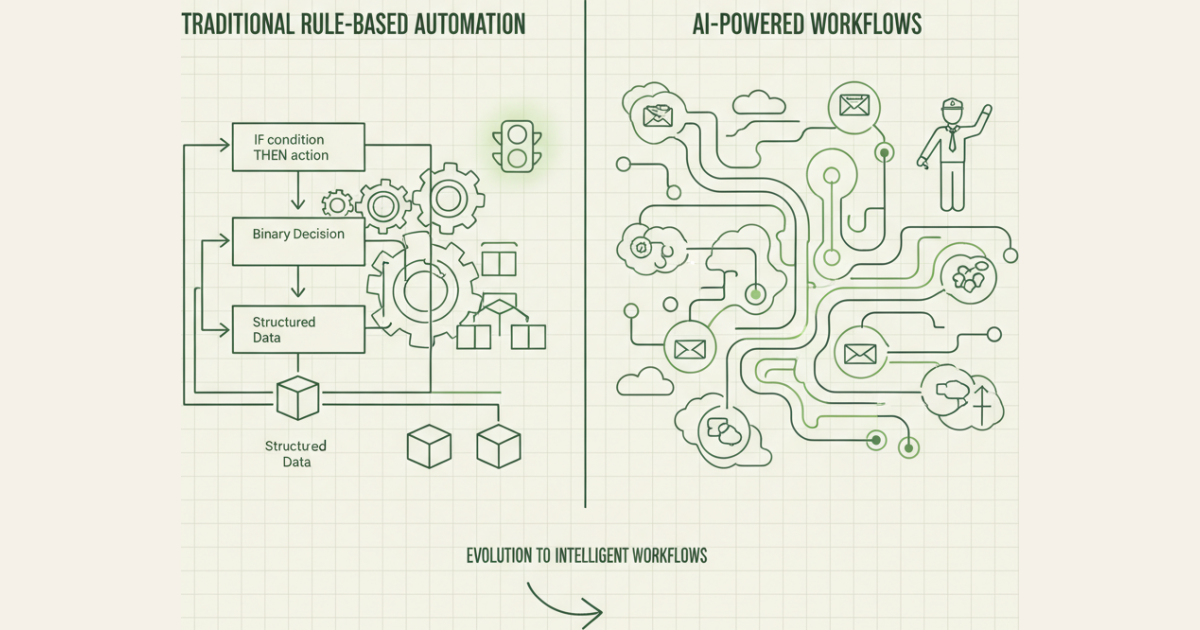
The key difference between AI agents and simpler automation tools lies in their autonomy and intelligence. While a chatbot might follow a decision tree to answer customer questions, an AI agent can understand the intent behind a customer's request, access multiple systems to gather relevant information, and provide personalized solutions without human intervention.
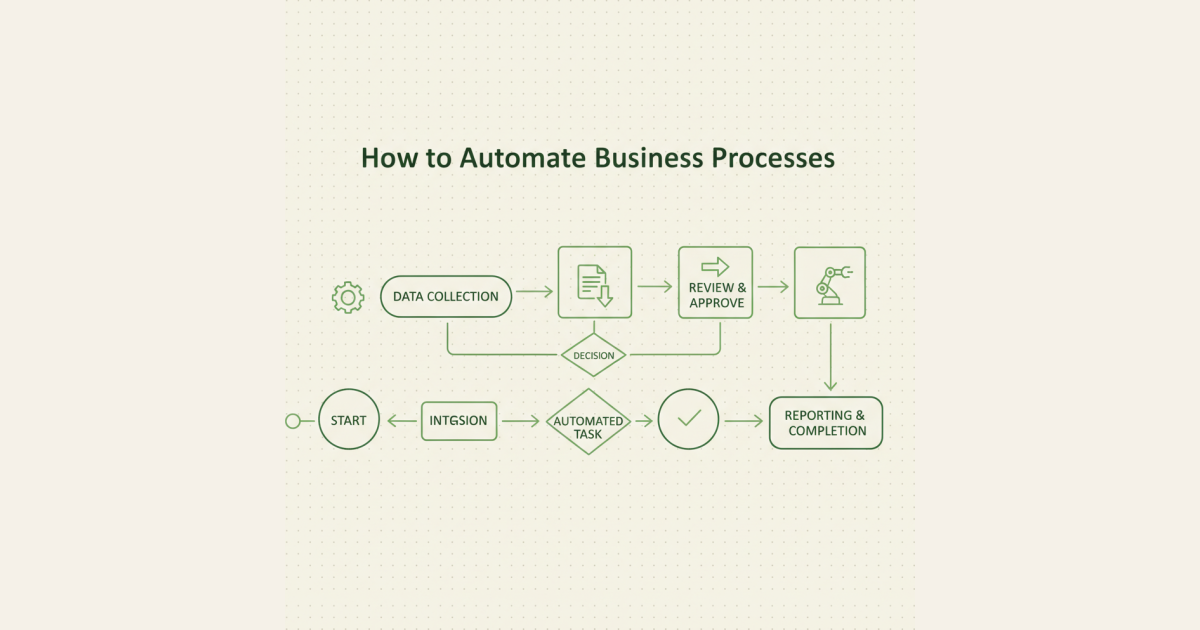
AI agents operate through a continuous cycle: they observe their environment (perception), process this information against their goals and knowledge base (reasoning), and then execute actions (action). This cycle allows them to handle complex, multi-step processes that would traditionally require human oversight.
For SaaS businesses, this means AI agents can manage everything from customer onboarding sequences to complex data analysis tasks, freeing up your team to focus on strategic initiatives that drive growth.
Why Businesses Are Adopting AI Agents Now
The timing isn't coincidental. Three major factors are driving the current surge in AI agent adoption:
Cost Pressure and Efficiency Demands: According to McKinsey's 2025 State of AI report, 62% of organizations are actively experimenting with AI agents, with cost reduction being the primary driver. SaaS companies are particularly feeling the pressure as customer acquisition costs continue to rise while investors demand improved unit economics.
Technology Maturity: The underlying AI technologies have reached a tipping point. Large language models can now understand context and nuance at a level that makes them practical for business applications. Integration capabilities have improved dramatically, allowing AI agents to work seamlessly with existing business systems.
Competitive Advantage: Early adopters are seeing significant advantages. Salesforce reports that companies using AI agents for customer service see 35% faster resolution times and 25% higher customer satisfaction scores. These aren't marginal improvements – they're game-changing advantages that create competitive moats.
The convergence of these factors has created what we call the "AI Agent Moment" – a perfect storm of necessity, capability, and opportunity that's driving widespread adoption across industries.
How Businesses Are Using AI Agents Today
| Use Case | Description | Business Impact | Implementation Complexity |
|---|---|---|---|
| Customer Service | Handle inquiries, troubleshoot issues, escalate complex cases | 35% faster resolution, 25% higher satisfaction | Medium |
| Sales Automation | Qualify leads, schedule meetings, follow up on prospects | 40% increase in qualified leads, 20% more meetings booked | Medium |
| Data Analysis | Process reports, identify trends, generate insights | 60% reduction in analysis time, 3x more actionable insights | High |
| Content Creation | Generate marketing copy, social media posts, email campaigns | 50% faster content production, 30% higher engagement | Low |
| Workflow Optimization | Automate repetitive tasks, manage project workflows | 45% reduction in manual work, 25% faster project completion | Medium |
| Financial Operations | Process invoices, manage expenses, generate financial reports | 70% reduction in processing time, 90% fewer errors | High |
The most successful implementations start with high-volume, repetitive tasks that have clear success metrics. Customer service and sales automation typically offer the fastest ROI because the impact is immediately measurable.
Real Business Case Studies
Case Study 1: SaaS Customer Success Automation
A mid-market project management SaaS company was struggling with customer churn. Their customer success team of 5 people was managing 2,000+ accounts, making proactive outreach nearly impossible.
They implemented an AI agent that monitors user behavior, identifies at-risk accounts, and automatically initiates retention workflows. The agent analyzes usage patterns, sends personalized check-in emails, and schedules calls with the human team when intervention is needed.
Results after 6 months: 23% reduction in churn rate, 40% increase in expansion revenue, and the customer success team could focus on high-value strategic accounts instead of reactive firefighting.
Case Study 2: E-commerce Inventory Intelligence
An e-commerce platform was losing $2M annually due to stockouts and overstock situations. Their manual inventory management process couldn't keep up with demand fluctuations across 10,000+ SKUs.
They deployed an AI agent that continuously monitors sales velocity, seasonal trends, supplier lead times, and market conditions to automatically adjust inventory levels and trigger reorders.
Results: 35% reduction in stockouts, 28% decrease in excess inventory, and $1.4M in recovered revenue within the first year. The agent now manages 85% of inventory decisions autonomously.
Case Study 3: Professional Services Proposal Automation
A consulting firm was spending 15-20 hours per proposal, with a 30% win rate. Their business development team was burning out from the manual proposal creation process.
They built an AI agent that analyzes RFPs, extracts requirements, matches them with past successful proposals, and generates customized proposals with pricing recommendations.
Results: 75% reduction in proposal creation time, 45% improvement in win rate, and the ability to respond to 3x more opportunities with the same team size.
Common Pitfalls When Implementing AI Agents
Myth: AI agents can replace human workers entirely.
Reality: The most successful implementations augment human capabilities rather than replace them. AI agents handle routine tasks while humans focus on strategy, creativity, and complex problem-solving.
Myth: AI agents work perfectly out of the box.
Reality: AI agents require training, fine-tuning, and ongoing optimization. Plan for a 3-6 month implementation and optimization period before seeing full benefits.
Myth: More advanced AI agents are always better.
Reality: The best AI agent is the one that solves your specific business problem efficiently. Sometimes a simple rule-based system outperforms a complex AI agent for straightforward tasks.
The key is starting with clear objectives, realistic expectations, and a willingness to iterate based on real-world performance.
How to Get Started With AI Agents
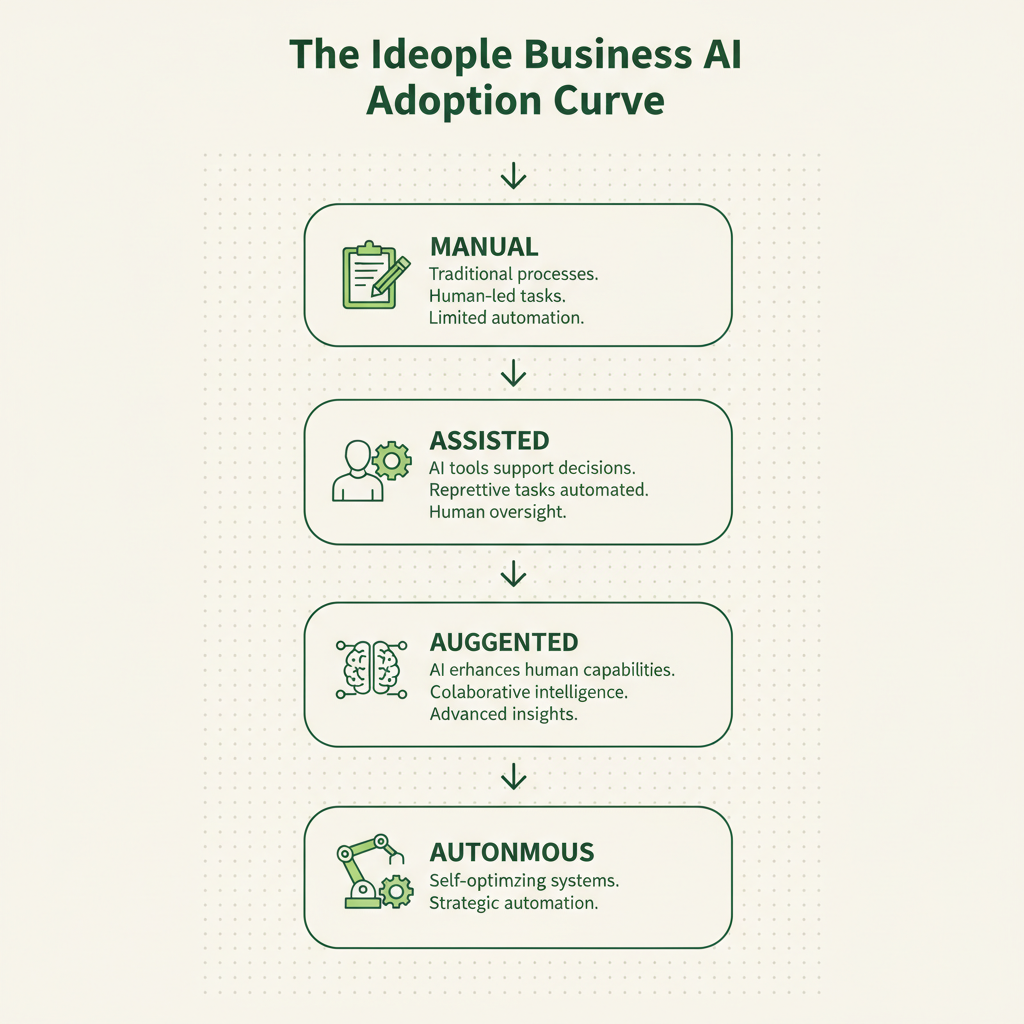
The Ideople Business AI Adoption Curve: A framework for understanding AI implementation stages in business operations
Step 1: Identify Your AI Adoption Stage
We've developed the Ideople Business AI Adoption Curve to help SaaS founders understand where they are and what comes next:
- Manual Stage: All processes are human-driven
- Assisted Stage: AI helps humans make better decisions
- Augmented Stage: AI handles routine tasks while humans oversee
- Autonomous Stage: AI operates independently with minimal human intervention
Most businesses should start in the Assisted stage before progressing to more advanced implementations.
Step 2: Choose Your First Use Case
Select a process that is:
- High-volume and repetitive
- Has clear success metrics
- Doesn't require complex decision-making
- Has good data availability
Customer service and lead qualification are often ideal starting points.
Step 3: Start Small and Measure
Begin with a pilot program covering 20-30% of the target process. Set clear KPIs and measure performance against your baseline. This approach reduces risk and provides valuable learning for broader implementation.
Step 4: Scale Based on Results
Once your pilot proves successful, gradually expand the AI agent's responsibilities. [Learn more about AI agent implementation strategies](https://ideople.com/blog/technology/what-is-an-ai-agent-the-complete-2026-guide-for-business-leaders) in our comprehensive guide.
Step 5: Build Internal Capabilities
As you scale, invest in training your team to work effectively with AI agents. This includes understanding their capabilities, limitations, and how to optimize their performance.
Ready to explore AI agents for your business? Subscribe to our newsletter for weekly insights on AI implementation strategies and real-world case studies from successful SaaS companies.
Frequently Asked Questions
What's the difference between AI agents and chatbots?
AI agents are autonomous systems that can perform complex, multi-step tasks across different systems and make decisions independently. Chatbots typically follow pre-programmed conversation flows and have limited ability to take actions beyond providing information. While a chatbot might answer questions about your product, an AI agent could analyze a customer's usage patterns, identify upsell opportunities, and automatically initiate a personalized outreach campaign.
How much do AI agents cost to implement?
Implementation costs vary widely based on complexity and scope. Simple AI agents for customer service or content creation can cost $5,000-$15,000 to implement, while complex systems for data analysis or workflow automation may require $50,000-$200,000+ investments. However, most businesses see ROI within 6-12 months through efficiency gains and cost savings. Consider starting with pre-built solutions before investing in custom development.
Can AI agents integrate with existing business systems?
Yes, modern AI agents are designed for integration. Most can connect with popular business tools through APIs, webhooks, and pre-built connectors. Common integrations include CRM systems (Salesforce, HubSpot), communication platforms (Slack, Microsoft Teams), and business intelligence tools (Tableau, Power BI). The key is choosing AI agents that support your existing tech stack or have robust API capabilities for custom integrations.
What ROI can businesses expect from AI agents?
ROI varies by use case, but typical results include 30-50% reduction in processing time, 20-35% improvement in accuracy, and 25-40% decrease in operational costs. Customer service AI agents often deliver the fastest ROI, with some companies seeing payback within 3-6 months. The key is setting realistic expectations and measuring both direct cost savings and indirect benefits like improved customer satisfaction and employee productivity.
Do AI agents require technical expertise to manage?
While initial setup often requires technical knowledge, many modern AI agent platforms are designed for business users to manage day-to-day operations. Look for solutions with intuitive interfaces, pre-built templates, and good documentation. However, having someone on your team with basic technical skills will help with troubleshooting and optimization. Consider partnering with an AI implementation specialist for complex deployments.
What industries benefit most from AI agents?
SaaS, e-commerce, financial services, and professional services see the highest adoption rates and ROI from AI agents. These industries typically have high-volume, data-rich processes that benefit from automation. However, AI agents can add value in almost any industry – the key is identifying repetitive processes that consume significant human resources and have measurable outcomes.
How long does it take to implement AI agents?
Implementation timelines range from 2-4 weeks for simple, pre-built solutions to 3-6 months for complex, custom systems. The typical process includes requirements gathering (1-2 weeks), system setup and integration (2-8 weeks), training and testing (2-4 weeks), and optimization (ongoing). Plan for a gradual rollout rather than a big-bang implementation to minimize disruption and maximize learning opportunities.
What are the security risks of AI agents?
Key security considerations include data privacy, access control, and potential for misuse. AI agents often require access to sensitive business data, so ensure they comply with relevant regulations (GDPR, CCPA, etc.) and follow security best practices like encryption and access logging. Choose vendors with strong security certifications and transparent data handling policies. Regular security audits and monitoring are essential for maintaining trust and compliance.
Rubal Gulati
Written by Rubal Gulati at Ideople. We build and run AI agents for our own business, then share what we learn.
Enjoyed this article?
Get AI automation insights delivered to your inbox. Start building with Ideople for free.
Get Started Free