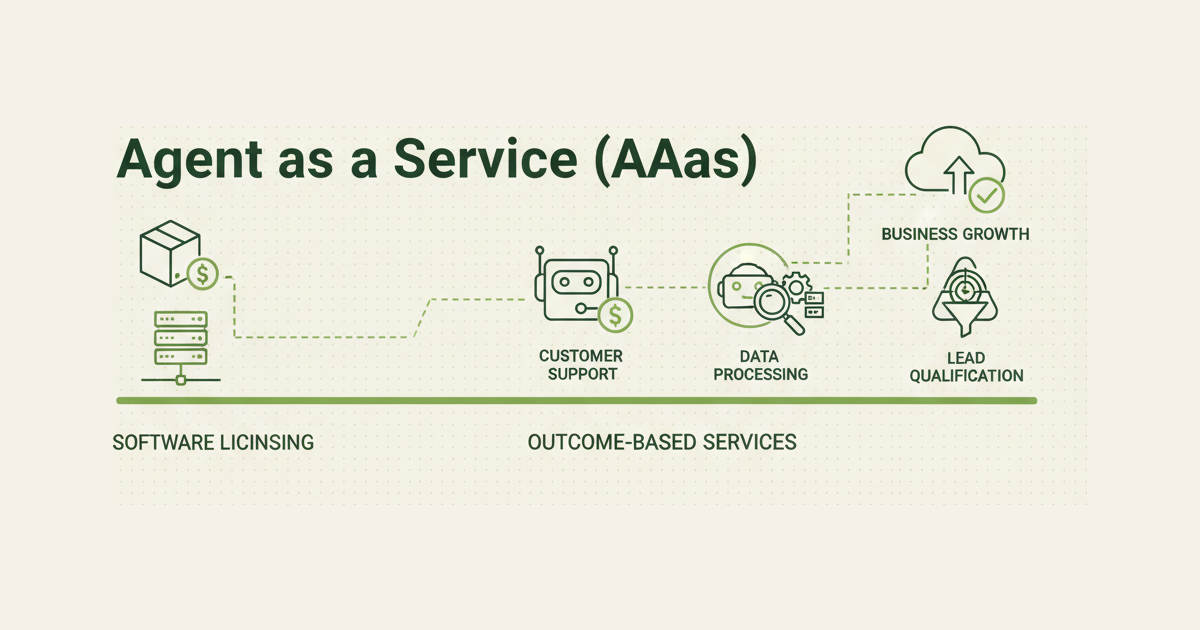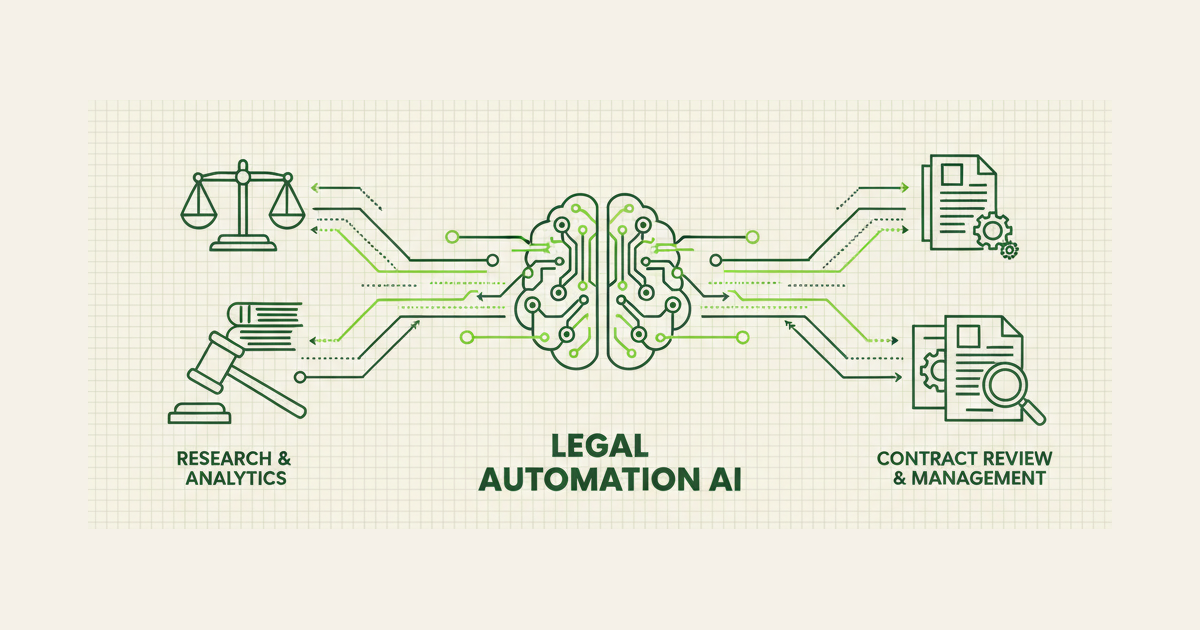
AI agents are revolutionizing how law firms handle routine legal tasks while maintaining professional standards
The Billable Hour Crisis: Why Law Firms Need AI Agents Now
Managing partners across the globe face an unprecedented challenge: clients demand faster turnaround times and cost-effective solutions while maintaining the highest standards of legal accuracy. The traditional billable hour model is under pressure as corporate clients increasingly question the value of junior associates spending dozens of hours on document review tasks that could be automated.
This shift has created what we call the "efficiency imperative"—law firms must deliver the same quality work in less time while maintaining profitability. [AI agents](https://ideople.com/blog/technology/what-is-an-ai-agent-the-complete-2026-guide-for-business-leaders) represent the most promising solution to this challenge, offering autonomous task execution that preserves attorney oversight while dramatically reducing manual workload.
What Are AI Agents for Law Firms?
AI agents for law firms are sophisticated autonomous software systems designed specifically for legal workflows. Unlike traditional legal software that requires constant human input, these agents can independently execute complex legal tasks from start to finish while adhering to strict confidentiality and compliance requirements.
These legal AI agents combine natural language processing, machine learning, and legal domain expertise to handle tasks like contract analysis, due diligence research, and regulatory compliance monitoring. They operate within predefined parameters set by attorneys, ensuring that all work meets professional standards while dramatically reducing the time required for routine legal processes.
What sets AI agents apart from conventional legal tech is their ability to make contextual decisions, learn from feedback, and adapt their approach based on specific case requirements. They can review hundreds of contracts in minutes, identify potential risks, flag inconsistencies, and generate detailed reports—all while maintaining detailed audit trails for attorney review.
For law firms, this means transforming high-volume, time-intensive tasks into streamlined processes that free up legal professionals to focus on strategic counsel, client relationships, and complex legal analysis that truly requires human expertise.
Why Law Firms Are Adopting AI Agents in 2026
The legal industry's adoption of AI agents has accelerated dramatically, driven by compelling ROI data and competitive pressure. According to the 2024 Legal Technology Survey by the American Bar Association, 67% of law firms now use some form of AI technology, up from 38% in 2023.
The financial impact is substantial. Firms implementing AI agents report an average 40-60% reduction in time spent on document review tasks, translating to significant cost savings and improved profit margins. A recent study by Thomson Reuters found that AI-enabled law firms achieve 25% higher billable hour efficiency compared to traditional practices.
Client expectations are also driving adoption. Corporate legal departments increasingly prefer firms that can deliver faster, more cost-effective services without compromising quality. This has created a competitive advantage for early AI adopters, with 78% of corporate counsel indicating they're more likely to engage firms that demonstrate technological sophistication in their service delivery.
7 Practical Use Cases for AI Agents in Law Firms
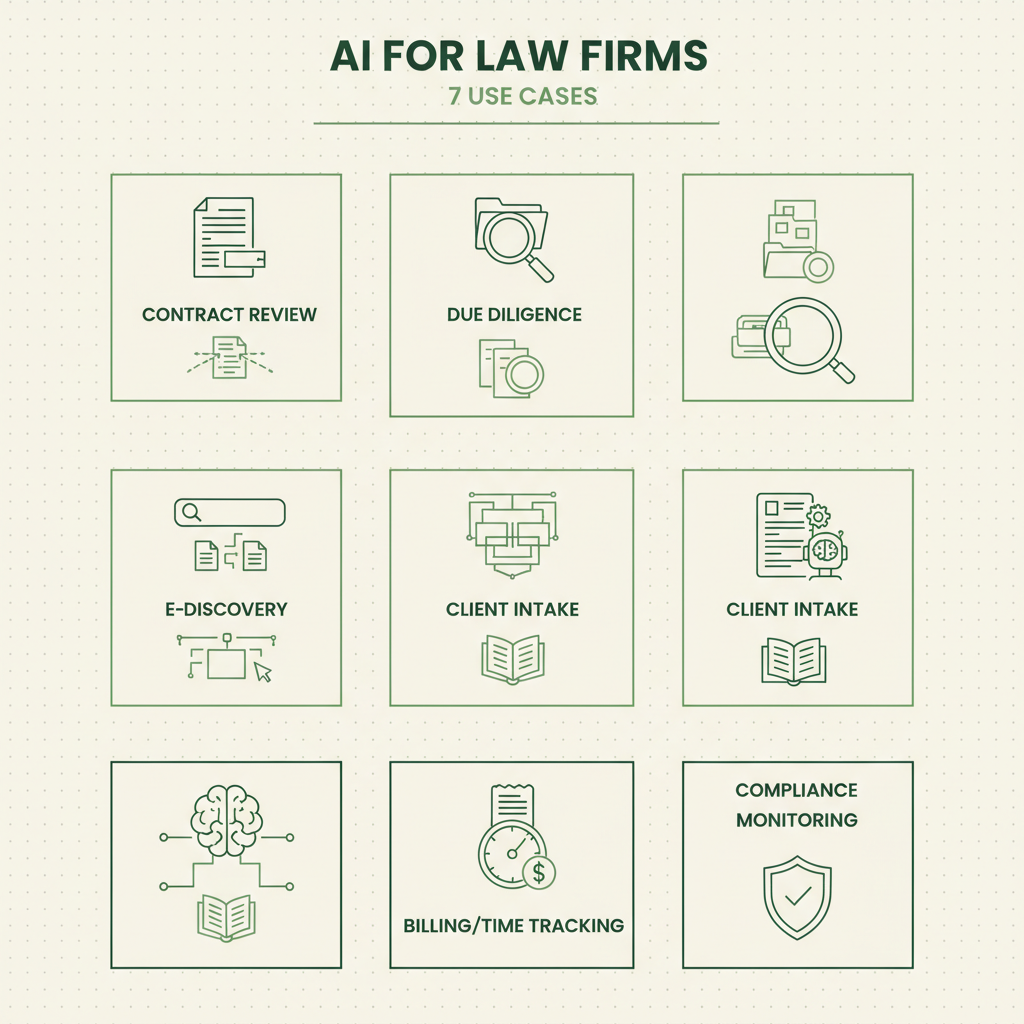
Seven key areas where AI agents deliver measurable value for legal practices
1. Contract Review and Analysis
AI contract review agents can process hundreds of agreements simultaneously, identifying key terms, potential risks, and deviations from standard language. These agents excel at spotting inconsistencies, missing clauses, and unfavorable terms that might escape human review during high-volume contract processing.
The technology is particularly valuable for M&A transactions, where legal teams must review thousands of contracts within tight deadlines. AI agents can categorize contracts by risk level, extract critical data points, and generate summary reports that allow attorneys to focus their attention on the most complex or high-risk agreements.
Implementation typically involves training the agent on your firm's preferred contract templates and risk tolerance levels, enabling it to flag deviations and suggest standard language replacements automatically.
2. Due Diligence Automation
Due diligence processes traditionally require junior associates to spend weeks reviewing corporate documents, financial records, and regulatory filings. AI agents can automate much of this work, systematically analyzing documents for red flags, compliance issues, and material information.
These agents excel at cross-referencing information across multiple document types, identifying discrepancies that might indicate potential liabilities or risks. They can generate comprehensive due diligence reports with source citations, risk assessments, and recommended follow-up actions.
For international transactions, AI agents can simultaneously process documents in multiple languages and jurisdictions, ensuring comprehensive coverage while reducing the time and cost associated with coordinating global legal teams.
3. E-Discovery Document Processing
E-discovery represents one of the most time-intensive aspects of litigation, often requiring legal teams to review millions of documents to identify relevant evidence. AI agents can dramatically streamline this process by automatically categorizing documents, identifying privileged communications, and flagging potentially responsive materials.
Advanced e-discovery agents use predictive coding to learn from attorney decisions, becoming more accurate over time at identifying relevant documents. They can also detect patterns in communication that might indicate key evidence or witness relationships.
This automation allows legal teams to focus their review efforts on the most critical documents while ensuring comprehensive coverage of the entire document universe, often reducing e-discovery costs by 50-70%.
4. Client Intake and Qualification
AI agents can handle initial client consultations, gathering essential case information, assessing potential conflicts of interest, and determining whether matters align with the firm's practice areas and expertise. These agents use structured interviews to collect comprehensive case details while ensuring consistent information gathering across all potential clients.
The technology is particularly valuable for personal injury, family law, and other high-volume practice areas where initial screening can help attorneys focus their time on the most viable cases. AI agents can also provide immediate feedback to potential clients about case strength and likely outcomes.
Integration with practice management systems allows these agents to automatically create case files, schedule follow-up appointments, and route qualified leads to appropriate attorneys based on expertise and availability.
5. Legal Research and Case Law Analysis
Legal research agents can simultaneously search across multiple databases, analyze case law relevance, and generate comprehensive research memos with proper citations. These agents understand legal concepts, can identify analogous cases, and track legal precedent evolution over time.
Unlike traditional keyword-based research tools, AI agents can understand the nuanced legal concepts and identify relevant authorities even when different terminology is used. They can also analyze judicial trends, predict case outcomes based on historical data, and identify the most persuasive authorities for specific legal arguments.
This capability is particularly valuable for appellate work, where comprehensive legal research and precedent analysis are critical to case success.
6. Billing and Time Tracking Automation
Time tracking remains one of the most tedious aspects of legal practice, yet accurate billing is essential for firm profitability. AI agents can automatically track time spent on various tasks, categorize activities by client and matter, and generate detailed billing entries with appropriate task codes.
These agents can monitor email communications, document creation, phone calls, and other activities to create comprehensive time records without requiring manual input from attorneys. They can also identify potential billing opportunities that might otherwise be overlooked.
Advanced billing agents can analyze historical data to optimize billing practices, identify the most profitable types of work, and provide insights into attorney productivity and client profitability.
7. Compliance Monitoring and Risk Assessment
Regulatory compliance is increasingly complex, particularly for firms serving clients in highly regulated industries. AI agents can continuously monitor regulatory changes, assess their impact on client operations, and alert legal teams to potential compliance issues.
These agents can track regulatory filings, monitor enforcement actions, and analyze industry trends to provide proactive compliance guidance. They can also review client communications and documents for potential regulatory risks, ensuring that firms can address issues before they become problems.
For firms with international clients, compliance agents can simultaneously monitor regulations across multiple jurisdictions, providing comprehensive risk assessment and compliance guidance.
Real Law Firm Case Study: Thompson & Associates
Thompson & Associates, a 45-attorney firm specializing in corporate law, implemented AI agents across their contract review and due diligence processes in early 2024. The firm was struggling with increasing client demands for faster turnaround times while maintaining their reputation for thorough legal analysis.
The Challenge: The firm's M&A practice was spending 60-70% of billable hours on document review tasks, limiting their ability to provide strategic counsel and reducing overall profitability. Junior associates were burning out from repetitive contract review work, and the firm was struggling to compete with larger firms on complex transactions.
The Solution: Thompson & Associates implemented a comprehensive AI agent system that could handle initial contract review, due diligence document analysis, and regulatory compliance checking. The agents were trained on the firm's standard contract templates and risk assessment protocols.
The Results: Within six months, the firm achieved remarkable improvements:
- 65% reduction in time spent on initial contract review
- 40% improvement in due diligence efficiency
- 30% increase in overall firm profitability
- 85% reduction in junior associate overtime hours
- 95% client satisfaction rate with faster turnaround times
The firm's managing partner noted that AI agents allowed their attorneys to focus on high-value strategic work while maintaining the thoroughness that clients expect. The technology also improved work-life balance for junior associates, leading to better retention rates.
Compliance & Confidentiality Considerations
Implementing AI agents in legal practice requires careful attention to professional responsibility rules and confidentiality requirements. The ABA Model Rules of Professional Conduct, particularly Rule 1.6 (Confidentiality of Information) and Rule 5.3 (Responsibilities Regarding Nonlawyer Assistants), provide the framework for AI agent deployment.
Attorney-Client Privilege: AI agents must be configured to maintain attorney-client privilege throughout all processes. This requires secure data handling, encryption protocols, and clear access controls that prevent unauthorized disclosure of confidential information.
Data Residency and Security: Many jurisdictions have specific requirements about where client data can be stored and processed. Firms must ensure that their AI agent providers comply with relevant data protection regulations, including GDPR for European clients and various state privacy laws in the US.
Supervision Requirements: ABA Model Rule 5.3 requires attorneys to provide appropriate supervision of nonlawyer assistants, including AI systems. This means establishing clear protocols for reviewing AI agent output, maintaining oversight of automated processes, and ensuring that all work meets professional standards.
Vendor Due Diligence: Firms must thoroughly vet AI agent providers to ensure they meet security, confidentiality, and professional responsibility requirements. This includes reviewing security certifications, data handling practices, and compliance with legal industry standards.
Common Misconceptions About AI Agents for Law Firms
Myth: AI agents will replace lawyers and reduce the need for legal professionals.
Reality: AI agents handle routine tasks, allowing lawyers to focus on strategic counsel, client relationships, and complex legal analysis that requires human judgment and expertise.
Myth: AI agents are not secure enough for confidential legal work.
Reality: Enterprise-grade AI agents designed for legal use include advanced security features, encryption, and compliance controls that often exceed traditional software security standards.
Myth: Implementing AI agents requires extensive technical expertise and disrupts existing workflows.
Reality: Modern AI agents are designed for easy integration with existing practice management systems and can be deployed with minimal technical expertise through user-friendly interfaces.
How to Pilot AI Agents in Your Firm
Step 1: Assess Your Current Workflows
Identify repetitive, high-volume tasks that consume significant attorney time but don't require complex legal judgment. Common candidates include contract review, document analysis, and initial legal research.
Step 2: Apply the CASE Method Framework
Evaluate potential AI agent solutions using our proprietary CASE Method:
- Confidentiality: Assess data security, encryption, and compliance with attorney-client privilege requirements
- Accuracy: Review performance benchmarks, error rates, and quality control mechanisms
- Supervision: Ensure adequate oversight protocols and attorney review processes
- Efficiency: Calculate potential time savings, cost reduction, and ROI projections
Step 3: Start with a Limited Pilot
Begin with a single practice area or specific task type to minimize risk and allow for thorough evaluation. Choose a use case where errors would be easily detectable and correctable.
Step 4: Train Your Team
Provide comprehensive training on AI agent capabilities, limitations, and proper supervision protocols. Ensure all team members understand their role in maintaining quality control and professional responsibility compliance.
Step 5: Scale Based on Results
After successful pilot completion, gradually expand AI agent use to additional practice areas and tasks. Consider partnering with experienced providers like Ideople to ensure smooth implementation and ongoing optimization.
Frequently Asked Questions
Are AI agents compliant with attorney-client privilege?
Yes, when properly configured. Enterprise AI agents designed for legal use include robust security measures, encryption, and access controls that maintain attorney-client privilege. However, firms must ensure their chosen solution meets all applicable confidentiality requirements and provides appropriate audit trails.
How much do AI agents cost for small law firms?
Costs vary significantly based on functionality and usage volume. Basic AI agent solutions start around $200-500 per attorney per month, while comprehensive platforms can range from $1,000-3,000 monthly. Most firms see positive ROI within 6-12 months through improved efficiency and reduced manual labor costs.
Can AI agents replace paralegals or junior associates?
AI agents complement rather than replace legal professionals. They handle routine tasks, allowing paralegals and associates to focus on more complex work that requires human judgment. Many firms find that AI agents actually increase demand for skilled legal professionals by enabling growth and improved service delivery.
What's the difference between AI agents and legal research tools?
Traditional legal research tools require human operators to input queries and analyze results. AI agents can autonomously conduct research, analyze findings, and generate comprehensive reports with minimal human input. They can also learn from feedback and improve their performance over time.
How long does it take to implement AI agents in a law firm?
Implementation timelines vary based on complexity and scope. Simple use cases like contract review can be deployed within 2-4 weeks, while comprehensive firm-wide implementations may take 3-6 months. Proper planning, training, and phased rollouts are essential for successful adoption.
Do AI agents work with existing practice management software?
Most modern AI agents are designed to integrate with popular legal practice management systems through APIs and standard data formats. However, integration capabilities vary by provider, so it's important to verify compatibility with your existing technology stack before implementation.
What happens if an AI agent makes an error in legal work?
Professional responsibility rules require attorney supervision of all legal work, including AI agent output. Firms should establish clear review protocols, maintain detailed audit trails, and ensure that all AI-generated work is reviewed by qualified attorneys before client delivery. Most AI agent errors are easily detectable through proper oversight procedures.
How do we train staff to work with AI agents?
Successful AI agent adoption requires comprehensive training programs that cover both technical operation and professional responsibility considerations. Training should include hands-on practice, error detection protocols, and ongoing education about AI capabilities and limitations. Many providers offer training resources and support to ensure successful implementation.
Ready to explore how AI agents can transform your law firm's efficiency and profitability? Learn more about [what AI agents can do for your business](https://ideople.com/blog/technology/what-is-an-ai-agent-the-complete-2026-guide-for-business-leaders) and discover how Ideople can help you implement cutting-edge legal technology solutions that maintain the highest standards of professional responsibility and client service.
Rubal Gulati
Written by Rubal Gulati at Ideople. We build and run AI agents for our own business, then share what we learn.
Enjoyed this article?
Get AI automation insights delivered to your inbox. Start building with Ideople for free.
Get Started Free